- Foraging Home Newsletter
- Posts
- Spring Foraging Classes
Spring Foraging Classes
Last call for Foraging School and Weekly Walks!

Bek Jopling
March 26, 2026
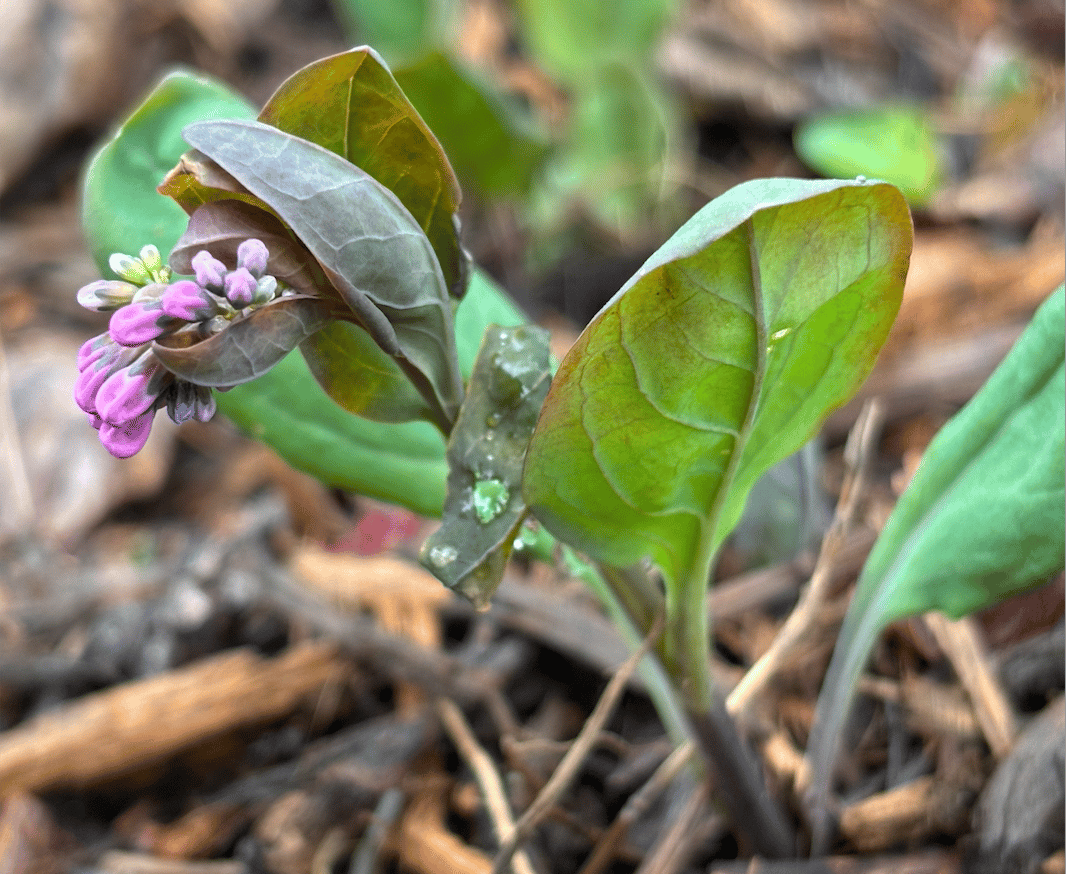
Get moving and meet your new spring friends!
The 13 seasons of western NC have really been running us through the past few weeks - from epic snowfall to 85 degrees, often only a day or two apart… but I think we are finally, hopefully, there. The bluebells are blooming and the woods are bursting with spring ephemeral wildflowers.
Do you know what spring ephemerals are? We have dozens of different species of beautiful blooms that open on the forest floor early in the season- sometimes living their entire above-ground lives (for the year) before the trees leaf out, taking advantage of the lengthening daylight before their home is shaded for the summer.
The chance to bask in their magic lasts only a few days or weeks, until flowers drop and plants quietly shift their energy back under the soil, and we have to wait a year to greet them again.
This means, if you want to see the indescribable wonder of the Blue Ridge Mountains in spring, it’s time to get out there!
This weekend is the last chance to get your season pass for Wild Food Community Walks, and registration for Foraging School ends next Friday!
So many of the plants and fungi we will be meeting and learning about are only here for a short while- don’t miss your chance to get to know them!
Foraging Now
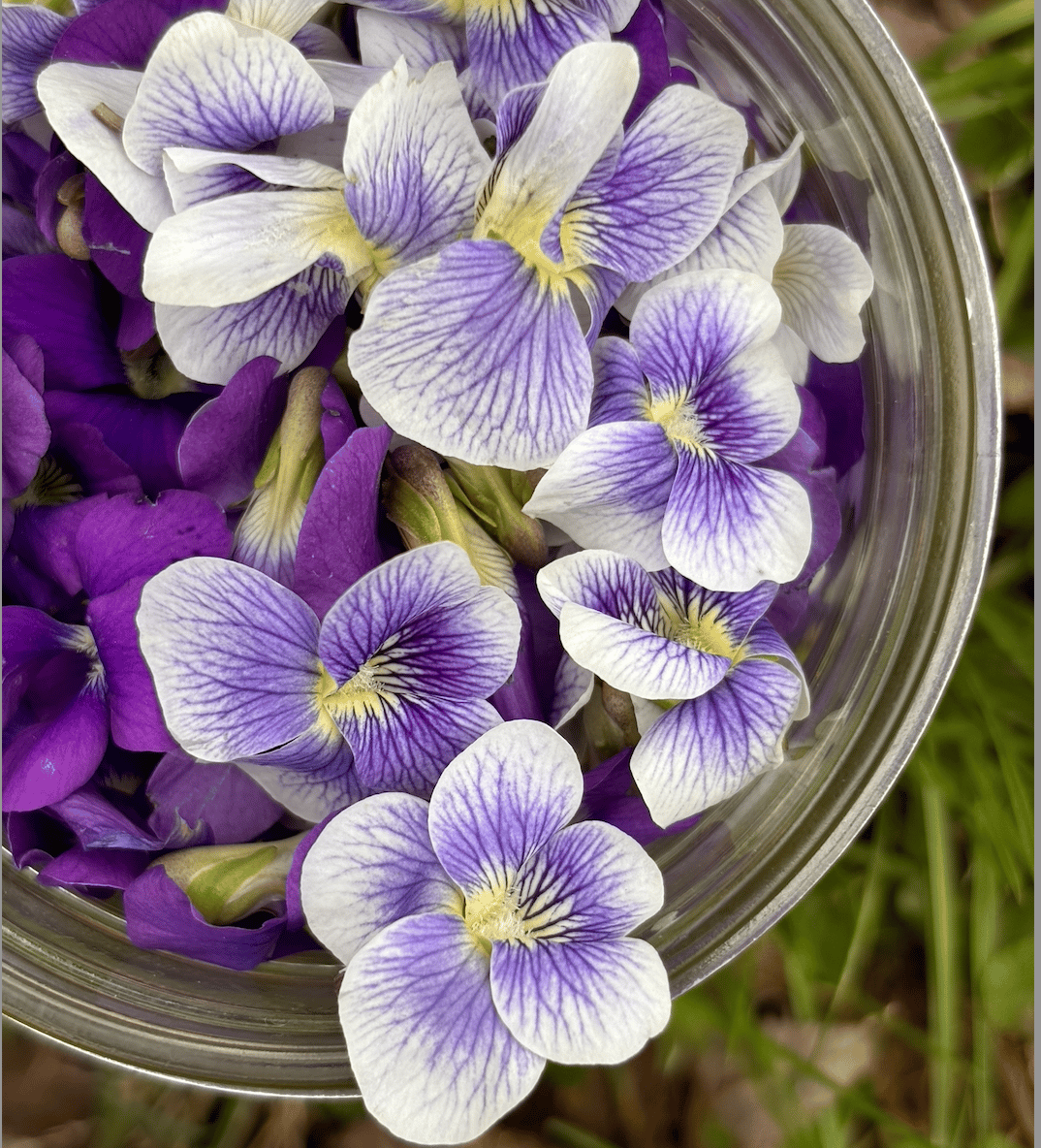
Violets, violets everywhere! If you are in western NC or a similar region right now, you are likely seeing BLANKETS of violet blossoms across yards and parks everywhere.
These little blossoms - as well as their leaves- are full of vitamins A & C, calcium and magnesium, antioxidants, and soothing properties for your body inside and out. But be careful- they are also a mild laxative in large quantities, so always go slow when trying new- to-you foods!
Oh, and they have a science-magic secret. When steeped in hot water the blossoms turn a gorgeous deep-blue indigo. But the tea is ph-sensitive, so something basic like baking soda will turn it teal/green, but something acidic like lemon juice turns it HOT PINK. Like, hot hot pink. It is very cool and I highly recommend trying this one at home. Just be sure you are 100% certain about the flowers you are gathering and that they haven’t been sprayed with chemicals or fertilizer.
To see the process, check out this reel!
Remember- there is lots to learn with foraging, so please always do your research before eating anything new to you - or better yet, come learn with me in-person!
Reading Now
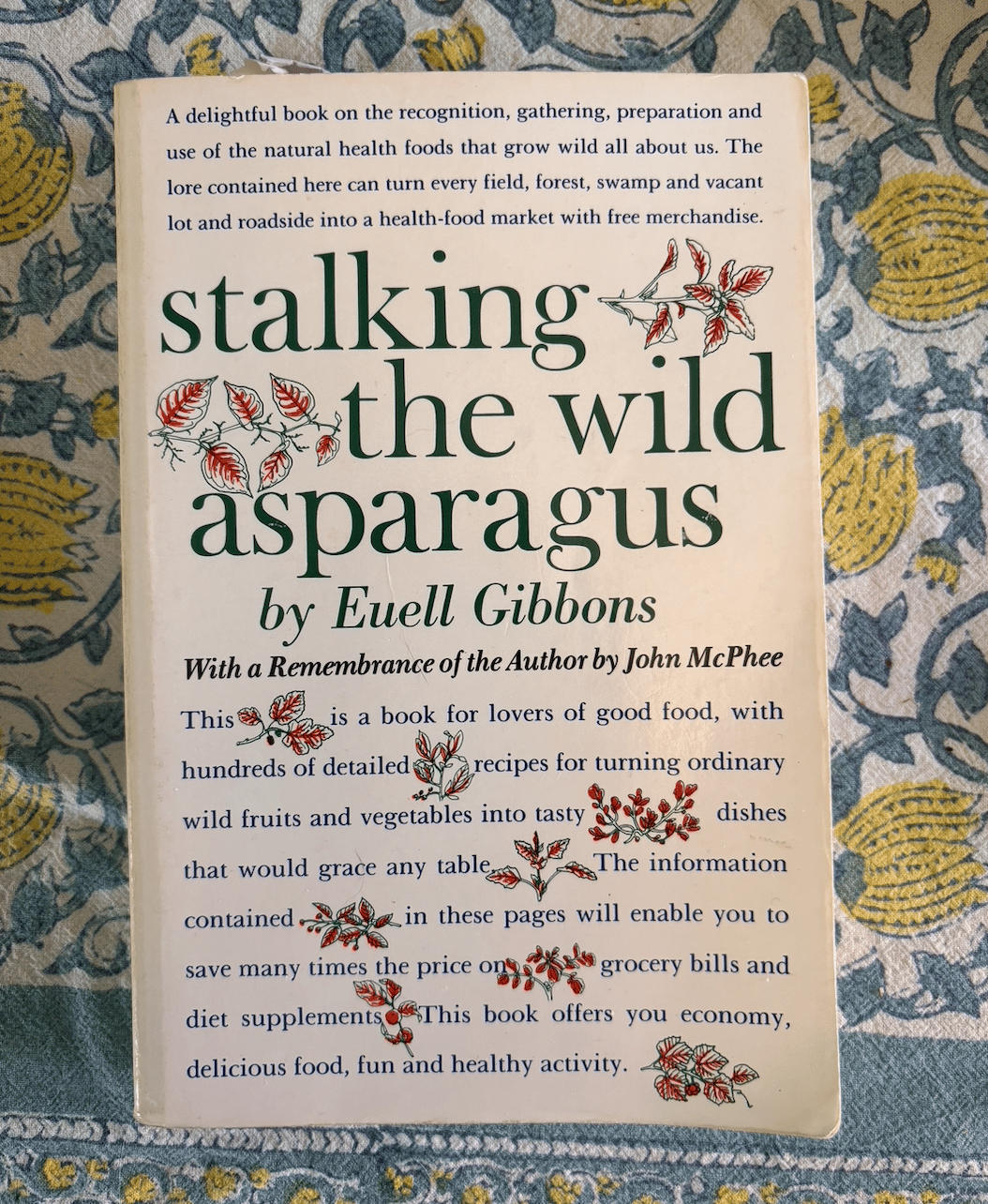
Not so long ago, knowing the edible food and medicine all around us wasn’t a special skill - it was just basic knowledge of being human! But after shifting away from our connection to the land, and more towards highly packaged and processed food, this was one of the first books written to reacquaint people with the quickly disappearing art of foraging.
First note: this was first published in 1962, and there is some dated and racist language to be aware of. I am not sure if there are any updated editions, but would not want to recommend the book without mentioning that.
Beyond that, it is a unique format, with each chapter covering a different wild edible, and a large portion of the text being written out recipes. I am really enjoying it for the interesting new ideas on how to use plants I know well, but there is also some important safety info missing, so I would not recommend it as a beginners guide to get started foraging plants you haven’t already learned how to use safely.
I am excited to try cooking with plants I have enjoyed for years in all new ways- as you can maybe see from the many bookmark tabs in the photo! Stay tuned here and on social media for some all new recipes!
Know someone who might enjoy this newsletter? Send them a link to subscribe! I promise to keep it interesting (in a nature-nerd way) and you can unsubscribe at any time ❤️